Saturday, May 31, 2014

My Little Luscious Light

Happy is the man who finds a true friend, and far happier is he who finds that true friend is his wife.
~Franz Schubert


Few men have the good fortune to find a partner as beautiful, strong, charming and brilliant as the one I call my wife.

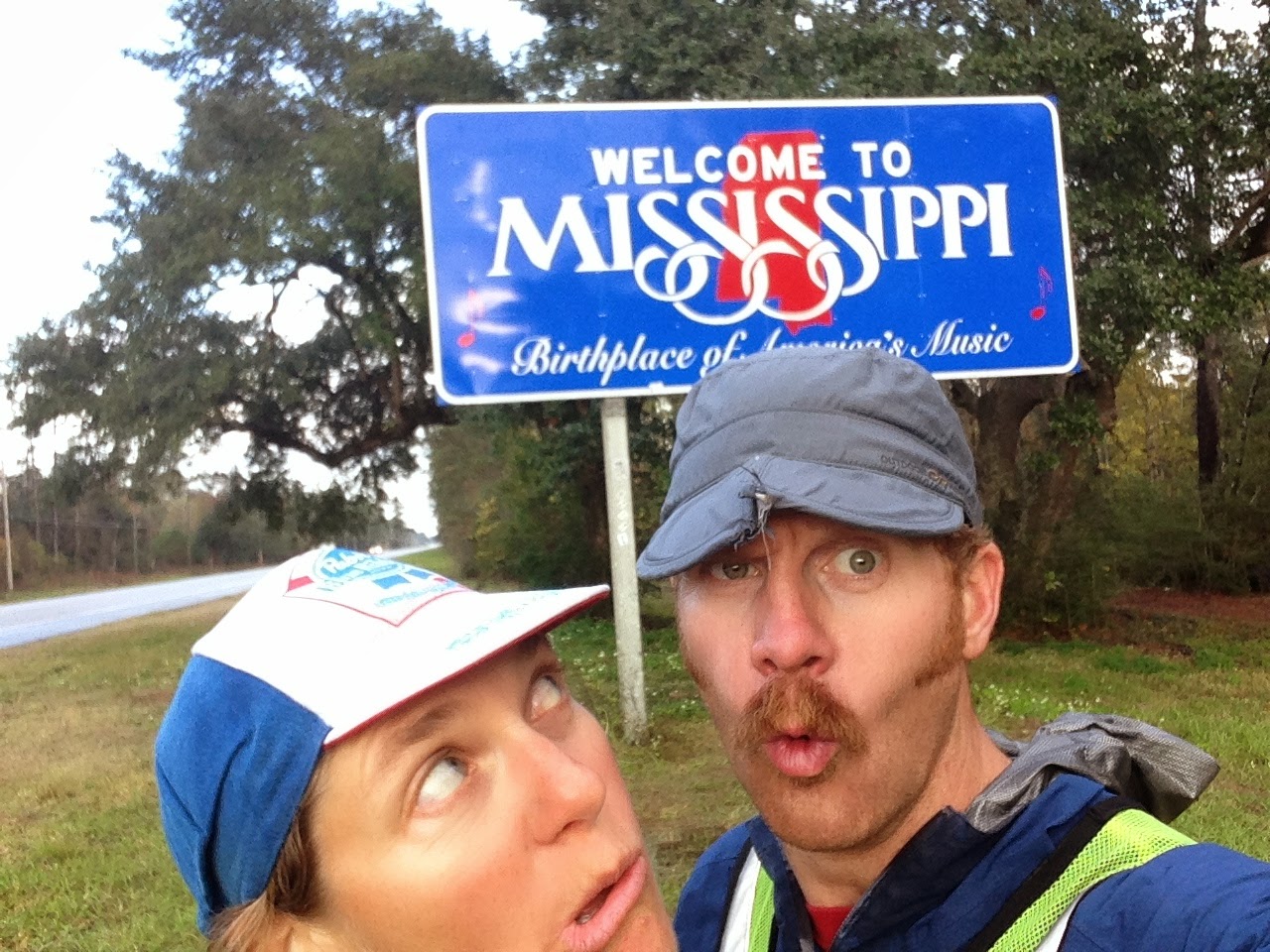
It is hard for me to believe that eleven months ago, Jenny and I saddled our bikes and rolled away from Snohomish with the sole intention of running for a year and getting to know each other a little bit better.    My bride,  who is made of gold made only two requests of me,

Don't kill me, and just make sure we have enough to eat.

I honored my end of the bargain, and as I sit here at my parents kitchen table sifting through a year's worth of photos, I feel like I just may be the luckiest man alive.

Kloshe konaway
Kloshe nanitch

Matt


Sunday, May 18, 2014

The Heart of Darkness


Warning:  Sensitive content and graphic pictures.  If you let your kids read this, be prepared for a difficult conversation about the cruel injustices of the world.


The hot air, heavy with exhaust fumes and the occasional aroma of inept sewers violates my senses as Jenny and I walk down the narrow, crowded streets of Phenom Penh.  This neighborhood appears like many others in the Capital City of Cambodia; motorbikes jockey for position with the steady blare of horns, women sit lazily under makeshift tarp shelters, swatting flies and selling noodles, small portions of BBQ meat, and every sundry of textiles imaginable.  Mangy dogs, nipples dragging on the ground,  roam the dusty streets, searching for a handout or a scrap of chicken bone tossed aside.  The mood is cheerful and relaxed,  underemployed tuk tuk drivers smoke, smile easy and laughingly joke each other under the shade of tall mango trees.  The hint of violence seems thousands of miles away and I struggle to wrap my head around the atrocities that have occurred in this country during my lifetime.  Forboding coils of rusting razor wire atop walls of crumbling concrete announce our arrival at Chao Ponhea Yat High School, more notoriously known as Security Prison 21 of the Khmer Rouge.

In April 1975, Communist Khmer Rouge soldiers marched through the streets of Phenom Penh, marking their victory against the American backed Republican Government of Lon Nol.  Although this pronounced an end to a savage five years of bloody civil war,  it also marked the beginning of one of the most barbarous periods of inhuman and merciless ethnic cleansing the world has ever known.

Pol Pot, the ruthless leader of the Khmer Rouge envisioned a new Kampuchea, a pure agrarian society free of the poisonous influence of capitalism and westerner corruption.  To accomplish his goal, the Khmer completely evacuated the capital, forcing men and women, young and infirm to walk for days to forced labor camps spread throughout the countryside.  At first, former government employees and soldiers were systematically executed for simply ending up on the wrong side of the victory line.  As the deranged paranoia of the Khmer Rouge grew, academics, doctors, teachers, students, monks, and factory workers; anyone seen as a threat to the Khmer were arrested and taken to prison camps such as the notorious S-21.  Prisoners at Tuol Sleng were methodically tortured until they confessed to being agents of the CIA, KGB or spies for Vietnam and wrote forced confessions detailing their crimes against the Khmer.  Despite their innocence, the accused admitted to all charges, often indicting family members, neighbors, co-workers and friends who were in-turn arrested and routinely executed.  The Khmer lived by the moto, To kill the grass, you must remove even the roots.  Entire families were erased to eliminate the prospect that one member might someday seek revenge.

As I walk the halls of this former school with classrooms converted into tiny cells, barred windows and blood stained floors, the muted echoes of the screaming horrors that occurred in this place pierce the stoic silence of visitors.  I look out on the well kept courtyard at the pull-up bars and climbing apparatus  that the Khmer converted into gallows and think of the young people who once honed their young bodies here under the hot Cambodian sun.  The tragic irony that a school, an institution of hope and  ambition was turned into a place of repressive suffering sickens my soul to its core and makes me wonder how this atrocity occurred here not so long ago.

For the first years of S-21's existence, the cadres buried their victim's bodies near the prison, but by the end of 1976 the genocide had reached hysteric levels and they were simply running out of room to dispose of the dead.  Just one of over one hundred and fifty mass extermination centers that litter the countryside of Cambodia, Choeng Ek tells the story of a revolution turned to paranoia.  After securing the forced confessions of the innocent at S-21, prisoners were loaded on trucks and driven 15 km out of the city to a quite countryside site of an old Chinese graveyard.  Blindfolded, they were forced to kneel at the edge of huge pits where the were hacked, bludgeoned, or stabbed to death by guards; bullets being expensive and in short supply.  The bodies were dumped into mass unmarked graves and buried without ceremony.  An estimated 20,000 people walked through the doors of Tuol Sleng Prison; twelve left  with their lives when the Vietnamese liberated Cambodia from the Khmer in 1979.  During the reign of the Khmer Rouge, over 2,000,000 Cambodians were executed, a full quarter of this country's population.  An entire generation of people were lost to this senseless destruction.

As I stand before the memorial to the slain, a towering Buddhist Pagoda, filled with the remains of those exhumed from the graves of Choeng Ek, I can't help but wonder what sinister evil lurks at the edge of humanity that allows men to dehumanize each other to the point that they could systematically beat, rape and exterminate their countrymen in the name of political ideology.  Visiting places like these shakes my faith in humanity to the core and leaves me wondering where our world is headed.  I like to think that mankind is learning, moving forward in peace, but recent genocidal violence in Armenia, Rwanda, Sudan, Afghanistan and presently in Syria and Burma points to the contrary.

It troubles me when I don't know answers, when I can't rationalize things that I see in a way that makes sense, when I feel like there is little justice in the world. The truth is that some actions of men are beyond explanation, and seeking understanding of the indiscernible will leave one more confabulated than when he began.  Edmund Burke once said, All it takes for evil to flourish is for good men to do nothing, and his words help me untangle the mess of emotions inside my head.  Lines of right and wrong however, are sometimes gray and I can't say what I might have said or done had the Khmer pulled my fingernails out with pliers, poured boiling water on my face, or skinned me alive.  I like to think that I would stand tall, suffer well and protect the ones that I love, but I don't know that for sure.  I  hope to never find out.

I find solace that in this year of travel, I have found that there are more people in this world who stand for peace, justice and kindness than there are that would see the world a dark place of fear, pain and suffering.  I will stand with those people in my days here, work to make those ideals a reality and pray that I will always find myself on the right side of the line, and more importantly, able to look myself in the mirror at the end of each day.

Kloshe konaway
Kloshe nanitch

Matt


A peaceful and clean courtyard betrays the horrors that once occurred at Cho Ponhea High School, more infamously know as Security Prison-21.

    
The Vietnamese discovered the horror of S-21 by following the stench of decomposing bodies.  Photographs of what they discovered haunt the walls of the prison today.


Students used this apparatus to ascend ropes, honing their young bodies.  The Khmer turned it into and instument of torture. 

The Khmer Rouge was meticulous as it was ruthless.  Every man, woman and child who entered the gates of S-21 were measured, weighed and photographed.  Thousands of ghostly nameless faces canvas the halls of the former prison.


Sunday, May 11, 2014

Forbidden City


Jenny and I stand outside the imposing brick walls of the Imperial city Kinh thanh Hue, the former capital of  Vietnam and the home of the Nguyen Dynasty, the last ruling Emperor Family of the country.  We have just been scolded in Vietnamese for attempting to enter through the exit gate and are having a little difficulty understanding the guard spitting directions of where we're to go.  As hard as I try to blend in, redheaded, soaked in sweat, holding a map in one hand and the Lonely Planet in the other, I scream Western Tourist!!! like a beacon on a dark night.  Standing still for more than ten seconds invites the zealous haggle of cyclo drivers.  A stout Vietnamese man, with a broad smile and a cigarette hanging out the side of his mouth approaches.   

Hello, where you from?  Cyclo one hour, I show you all of the city.  You buy from me.  Where you go?  I take you!

I respond that we are American and politely decline the offer, telling the driver that we are exploring by foot and prefer to walk, but with this interaction his bid only becomes more zealous.


Very cheap, five dollars one hour.  You hire one hour I show all city, take you back to hotel.  

No thank you mate, I again respond with calm; I feel Jenny's irritation meter maxing out as she tries to orient us by unfamiliar landmarks and strange street signs to the entrance of the ancient high walled city.  


Why you no help me?  I very poor.  I have many children very hungry. You hire me, very good tour.  You rich American, I poor Vietnamese, you help me.  Five dollars, one hour, I show you whole city, we go now!  He smiles, as if expecting his doggedness will wear on my endurance and I will eventually give in; I suspect that his strategy has been effective in the past.

I begin to calmly, yet sternly decline his offer again, but after weeks in Vietnam and the nearly constant stream of people trying to hawk you things that you neither need or want, the hot sun beating down on our heads, and just trying to concentrate for minute,  Jenny has had it and interrupts.


Look, it isn't about you!  We just want to walk and we have said no more than once. Please leave us alone!


The intensity is one I recognize from the few times Jenny has been really pissed at me, and our would-be tour guide has obviously heard the tone in the past.  He snarls something unpleasant quietly in Vietnamese, turns and leaves.  Jenny and I quickly depart and find the entrance gate to the palace, pay our 50,000 dong ($2.50) and enter the ancient city among hoards of Western, Chinese, and wealthy Vietnamese Tourists, free from the haggle of street vendors.


The Imperial City was largely destroyed in the Tet Offensive of 1968 and as we walk through what remains of the the intricately designed structures built with elaborate lacquered beams, sweeping roof lines, golden thrones, and ornate ceramic mosaic walls,  I can't stop thinking about our interaction with the cyclo driver and the how the function of these massive brick walls hasn't changed much in last two hundred years.  Just  as they once separated the elite ruling class of Vietnam from the lowly commoners outside, they now allow Jenny and me, elite American tourists, to be away from the hassle and harsh realities of life in Vietnam, even if just for a moment.


Vietnam is a quickly changing place, but make no mistake, it is still a country emerging from the third world.  Despite the fact the even the poorest people have cell phones, flash cars like BMW's and Mercedes are not an uncommon sight, and Wifi is better than the U.S.,  the economic portrait for most Vietnamese people isn't very rosy.  With a per capita GDP of less than $2,000 USD, I likely carry more money in my pocket than most people earn in a month.  When a cyclo driver pleads I am poor, my children our hungry, why don't you help me, it may be a well-delivered emotional plea to help separate from me from some of my money, but it is also the truth.  If I were in his shoes I would likely be saying and doing the same thing.


I  also carry a burden of knowing that my county dropped over 7 million tons of bombs on this land during the Vietnam conflict, and that the people who suffered the most never picked up a gun and were far to poor to tell the difference between a capitalist and communist government.  When bombs quit falling, thirty years of economic isolation stepped in to finish the job.  Things are improving in Vietnam, but with a population of 90 million, and an economy largely dependent upon tourist dollars, there just isn't enough to go around.


Traveling the world is meant to challenge you, make you feel uncomfortable, and question your beliefs and ideals.  Long have I preached the virtues of simplistic living, shrinking your footprint and rejecting the materialism that is harmful to both our souls and the planet we live on.  Being in Vietnam has made me realize though that sometime things are not all that black and white.  Values get compromised, hopefully for right reasons.  


In a few I'm weeks coming home with a backpack of shit that I really don't need;  trinkets, t-shirts and some good handmade clothes.  Before I leave this country that I have grown very fond of, I am also going to hire a cyclo driver and let him pedal me around a city that I would rather walk, hell I might just pay him to let me drive, but he'll make some money on the deal.  At the end of the day, I guess I decided that best way my visit to Vietnam could have a net positive impact on the people who need it the most is to spend a few more of my greenbacks than I might have originally intended.  I haven't abandoned my belief that consuming less is the only path for a peaceful and sustainable future, I just realize that sometimes it's more important to make someones life better today than stand on my soapbox of minimalist austerity and hold tight to my money, especially when a guy who desperately tries to sell bicycle rides all day for a living puts his kids to bed at night with an empty stomach.  

Kloshe konaway

Kloshe nanitch

Matt


The Imperial City of Hue, built by the last Emperor Family of Vietnam was almost completely destroyed during the Test Offensive of 1968.  Declared a UNESCO World Heritage Site in 1993, the Vietnamese Government is slowly restoring the city to it's former glory.


The former combat base of  Khe Sanh is now little more than a barren strip of land with a few bunkers and and captured US military hardware.  There is however, and interesting museum that explains the significance of the battle of Khe Sanh in the Vietnam War.  Just a few kilometers south of the the Demilitarized Zone and near the the Laos boarder,  Khe Sanh was literally smack in the middle of the Ho Chi Mihn Trail, a network of roads and paths that carried arms and supplies into Southern Vietnam, much by bicycle.  Between January and July of 1968 Khe Sanh was under nearly constant ground, artillery, mortar and rocket attacks.  The US responded by dropping over 100,000 tons of bombs on the  area surrounding Khe Sanh, which still scars the landscape today.  Thousands of American and Vietnamese lives were  lost on this chunk of ground that America abandoned shortly after successfully defending the five month siege.  


 The Vihn Moc Tunnels, located just north of the Ben Hai River in the DMZ were built to shelter villagers and solders from some of the heaviest bombing sorties of the Vietnam War.  The 2000 meters of tunnels were dug by hand up to 30 meters under the ground and contained wells, living quarters, kitchens and hospitals.  They are testament to the strength and resilience of the Vietnamese People.


 The City of Hoi An is one of the oldest ports in SE Asia and has a long and rich history of trade and textile manufacturing.  Jenny and I spent a bit of time and money with the nice girls at Shop 41 in the market and got some pretty flash cloths to bring home for the effort.

Orange Matt.


 The City of Nha Trang was a bit of a disappointment with it's high rise hotels and Western & Russian Restaurants.  The Temples and Pagodas were some the best we have seen though.

 Not Portlandia.

 Po Nagar Temple dates back to the year 781 and was originally constructed as a Hindu worship.  Today Vietnamese and Chinese Buddhists come here to pray and make offerings.